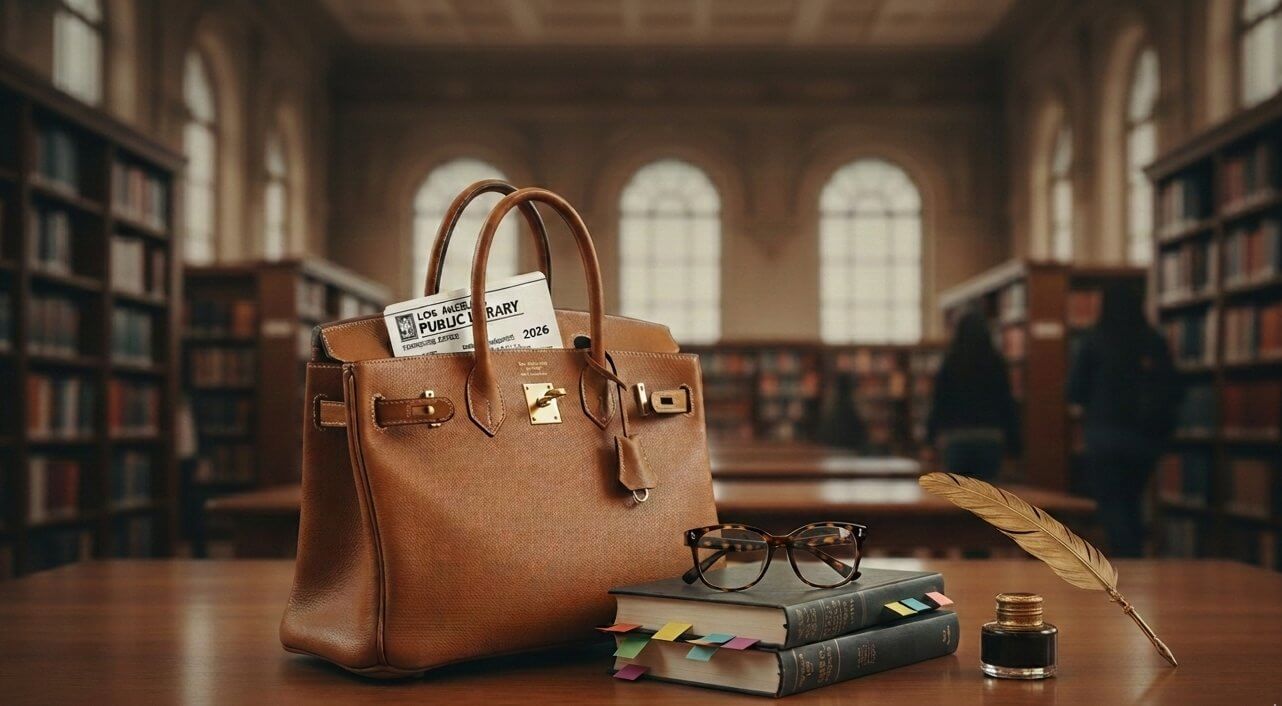

In 2026, the most exclusive accessory is no longer a six-figure handbag. It is a simple piece of plastic. The public library card is technically free to everyone. the public library card. This shift represents a merging of high-fashion “quiet luxury” with a performance of intellectualism. As celebrities pivot toward more “serious” public personas, they are rebranding reading as the ultimate signifier of wealth and discipline.
This trend, often called “The Library Card Birkin,” treats classic literature and institutional access as a luxury gateholding mechanism. By framing literacy through the lens of high-fashion aesthetics, the modern influencer has transformed the quiet, democratic space of the library into a backdrop for a new kind of social capital.
The Aesthetic of the “Lawyer Era”
The rise of the “Lawyer Era” aesthetic marks a departure from the hyper-visible logomania of the previous decade. Influential figures like Kim Kardashian have publicly documented their legal studies, creating a visual language centered on thick casebooks, neutral-toned highlighters, and minimalist study spaces. This is not just about pursuing a degree; it is about the prestige associated with “reading the law” and the perceived rigor of a scholarly life.
When a celebrity shares a photo of a vintage copy of a classic novel or a stack of legal briefs, they are signaling a move toward “intellectual quiet luxury.” This aesthetic prioritizes depth and history over the fast-fashion cycles of the past. It suggests that true status is found in the things that cannot be bought instantly—specifically, the time required to read a complex text. You can see this shift in how audiences choose their literary communities, often asking Which Celebrity Book Club is the Best for You? to match their personal brand.
The Library Card as a Status Symbol
Public libraries aim to serve as the most accessible institutions in the United States. However, the 2026 trend now presents the library card as a “membership” to an exclusive world. The card itself has become a prop in high-production social media posts, often tucked into a designer wallet or resting next to a minimalist espresso. This creates a paradox where an object meant for universal access is used to signal a specific, elevated lifestyle.
- The card serves as a “proof of character” for followers.
- It aligns the user with “old money” academic traditions.
- It provides a low-cost entry point into a high-fashion aesthetic.
This behavior reflects a broader cultural shift where “cultural literacy” is the new currency. In an age of AI-generated content and digital noise, the physical act of holding a library book suggests an authentic, un-bottable human experience. It creates an aura of exclusivity similar to A Peek Inside of Downtown LA’s Most Elusive Private Library, where the setting is as important as the text.
Literacy as the New “Quiet Luxury”
The term “quiet luxury” originally referred to expensive clothing without logos. In 2026, it has expanded to include “quiet hobbies”—activities that require significant time and mental focus. Literacy has become a “flex” because it implies the participant has the leisure time to engage with long-form content. While anyone can buy a designer bag on credit, not everyone can or will spend thirty hours finishing a Russian novel.
This performance of literacy often borders on gatekeeping. By curating specific “classic” lists, influencers dictate what is considered “worthy” of the modern aesthetic. This can lead to a narrow view of literature that favors a specific look over diverse contemporary voices. However, it also has the unintended positive effect of increasing foot traffic to local library branches across the U.S., a trend supported by data from the Institute of Museum and Library Services.
The Social Impact on Public Institutions
The intersection of celebrity culture and public libraries has real-world consequences for local communities. While some critics argue that the “aestheticization” of reading devalues the actual content of the books, library systems have seen a surge in new registrations. The trend has forced libraries to adapt, with many branches now offering “aesthetic” reading rooms and branded merchandise to appeal to a younger, fashion-conscious demographic.
- Increased funding and visibility for urban library systems.
- A resurgence in the popularity of physical print media over e-readers.
- New “influencer-led” book clubs that drive demand for specific titles.
For the everyday reader, this trend is a double-edged sword. On the one hand, it validates the importance of public institutions. On the other hand, it risks turning a communal resource into a “vibe” that feels inaccessible to those who do not fit the high-fashion mold. According to the American Library Association, the role of the library is to serve as a cornerstone of democracy, regardless of current fashion trends.
Analyzing the Broader Social Meaning
The “Library Card Birkin” trend reveals a deep-seated anxiety about digital saturation. We are currently living in a period where “the act of being seen doing something” is often more valued than the thing itself. By turning the library card into a status symbol, society is attempting to reclaim a sense of permanence. Books represent a physical legacy in a world that feels increasingly ephemeral and digital.
This trend also highlights the evolving nature of celebrity influence. Figures are no longer content with being seen as “famous for being famous.” They want to be seen as experts, advocates, and intellectuals. The library is the perfect stage for this transformation because it carries an inherent moral and intellectual weight. It is the ultimate “rebrand” for those looking to distance themselves from the superficiality of early social media culture.
Conclusion
The rise of the library card as a fashion status symbol shows the power of aesthetic branding in 2026. The Kardashian-inspired “Lawyer Era” may seem performative to some. However, it has helped make literacy feel desirable again. Whether driven by “quiet luxury” or real curiosity, the outcome is the same. More people are paying attention to books. There is also renewed appreciation for the institutions that protect them.