Direct Answer
A story can include several female characters without giving them meaningful control over what happens. The more interesting question is whether those women make decisions, influence events, and face consequences because of their own actions. That distinction helps explain the appeal of unapologetic women in fiction and why readers continue to look for stories that give women more than supporting roles.
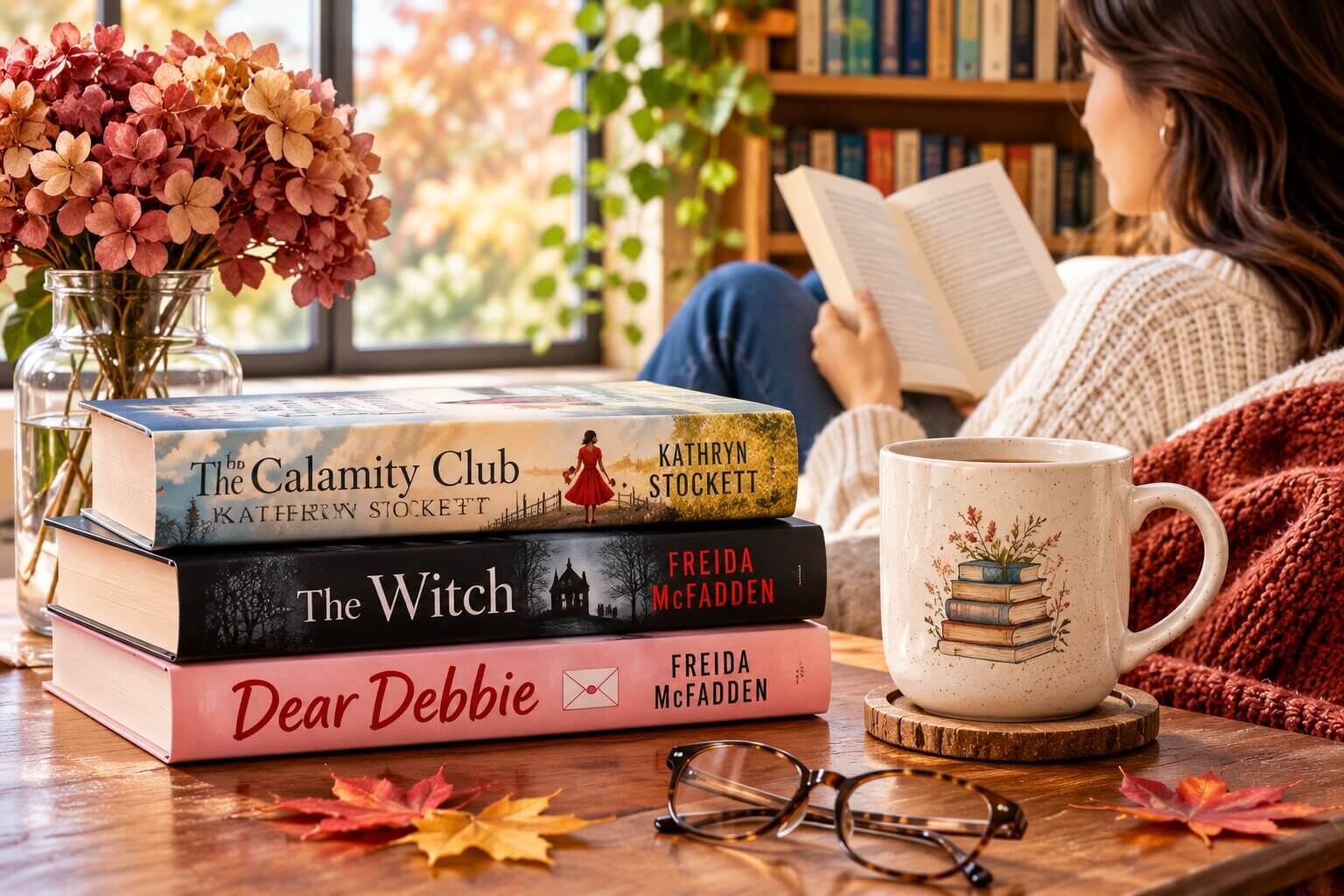
For a late-autumn reading list, The Calamity Club by Kathryn Stockett, The Witch by Freida McFadden, and Dear Debbie, also by Freida McFadden, offer three different ways to explore women navigating difficult circumstances.

What Does Agency Look Like in Fiction?
Character agency is more than having a female protagonist or giving a woman a prominent place on the cover. It means her decisions matter to the direction of the story.
A character might challenge an unfair expectation, take responsibility for a difficult choice, or pursue a goal that conflicts with what other people want for her. Her actions can create new problems as easily as they solve existing ones.
Research offers another way to examine this issue. The 2024 PNAS study, “The Gender Agency Gap in Fiction Writing (1850 to 2010),” found that female characters were portrayed as less active than male characters, particularly in fiction written by men.
That finding raises an important question for readers: Are women in a story genuinely shaping events, or are they mainly reacting to decisions made by other characters?
The distinction matters because unapologetic women in fiction are often memorable precisely because they influence what happens. They can be ambitious, stubborn, compassionate, impulsive, or mistaken. Their value as characters comes from having motivations and consequences of their own.
Three Books That Put Women’s Experiences in Different Contexts
The following selections approach women’s choices through different genres. Rather than offering three versions of the same heroine, they provide contrasting settings, relationships, and sources of tension.
The Calamity Club by Kathryn Stockett: Friendship Against Social Restrictions
Set in Oxford, Mississippi, during the Great Depression, The Calamity Club brings together Birdie Calhoun, Charlie, and Meg, an eleven-year-old orphan.
Birdie is outspoken and wants to help a struggling family. Charlie has little left to lose, while Meg’s circumstances bring another perspective to their developing connection. Together, they look for greater control in a society that offers women limited choices.
The novel’s emphasis on friendship and resilience makes it a natural choice for readers who enjoy historical fiction. Its strong sense of place and larger cast also offer plenty of material for discussing how social circumstances shape individual decisions.
The Witch by Freida McFadden: The Weight of a Troubled Past
In The Witch, Julia Barlow returns to her family’s estate in rural Massachusetts after losing her job and apartment. Her return does not provide the peaceful retreat she might expect. Strange events encourage her to investigate the property’s history.
That investigation leads to the story of a woman executed for witchcraft in 1692. The historical connection gives the novel an unsettling atmosphere built around family secrets and the past’s influence on the present.
Readers who enjoy gothic suspense may appreciate how the setting and buried history contribute to the mystery. The story also provides an opportunity to consider how women have been judged and treated by the societies in which they lived.
Dear Debbie by Freida McFadden: When Advice Becomes Personal
Dear Debbie introduces Debbie Mullen, an advice columnist who helps women deal with difficult marriages and home lives. Her professional experience does not protect her from problems in her own household.
After losing her job, Debbie notices strange behavior from her daughters and begins suspecting that her husband has secrets. Her familiar role as the person offering answers becomes more complicated when she has to deal with uncertainty herself.
Dark humor and domestic tension shape the story. Readers interested in family relationships, marriage, and the difference between giving advice and making personal decisions may find it especially engaging.
Why These Characters Deserve More Than a Simple Label
Calling a female character “strong” can sometimes obscure what actually makes her interesting. Strength can mean independence, persistence, honesty, or the willingness to confront a difficult situation. It can also involve making a choice that other characters—and readers—disagree with.
This is where unapologetic women in fiction can challenge familiar expectations. A character does not have to be morally perfect to have agency. She might make a mistake, misjudge someone, or pursue a goal at another person’s expense. What matters is whether the narrative allows readers to understand her motivations and see how her actions affect the people around her.
The three books offer different contexts for examining those questions. The Calamity Club emphasizes friendship and social restrictions; The Witch draws on historical persecution and family secrets, and Dear Debbie explores domestic uncertainty.
Turning Representation Into a Reading Conversation
Readers can use these stories to look beyond whether they liked a particular character. A more revealing discussion might ask:
- Which woman has the greatest influence over the events in her story?
- What choices are available to her, and which options are restricted by her circumstances?
- Does the story allow her to make mistakes without reducing her to those mistakes?
- How do family, friendship, and social expectations affect her decisions?
- Would readers judge her actions differently if the character were a man?
These questions can work in a traditional book club or in online reading communities. BookTok, in particular, has helped readers exchange recommendations and interpretations across social platforms. A 2025 study published in Pedagogy, Culture & Society, “Teaching with TikTok: Leveraging Social Reading Cultures Through #BookTok,” examined how social reading cultures can support engagement.
The popularity of shared reading discussions shows that a book’s impact does not necessarily end with its final chapter. Readers continue to interpret characters, debate their decisions, and recommend stories to others.
Frequently Asked Questions
Why do readers enjoy strong female characters?
Readers often appreciate women who have independent goals and influence the events around them. Characters whose choices affect the plot tend to offer more complexity than those who exist only to support another person’s journey.
What makes a good book about female friendship?
A good friendship story gives the women meaningful relationships and individual motivations. They can disagree, change, make sacrifices, and influence one another without losing their separate identities.
What makes a good winter TBR book?
The best seasonal choice depends on what a reader wants. Historical settings, suspense, memorable relationships, and an absorbing atmosphere can all make a book appealing during the colder months.
Which of these books is best for a book club?
All three can encourage discussion, but The Calamity Club may be especially suitable for groups interested in friendship, historical circumstances, resilience, and the restrictions placed on women.
Final Thoughts
Representation becomes more meaningful when female characters are allowed to shape their own stories. Their decisions should matter, their motivations should have depth, and their actions should carry consequences.
That is the lasting appeal of unapologetic women in fiction. They do not need to be perfect examples of courage or independence. They need to be fully developed characters whose choices give readers something worth considering.
For your late-autumn reading list, would you rather explore friendship during the Great Depression, an unsettling family history, or a domestic story filled with secrets?
Related reading on clooudi.com: The Life-Cycle Lesson Amy Grant Found in Charlotte’s Web; Four Comfort Reads for a Quiet Weekend.