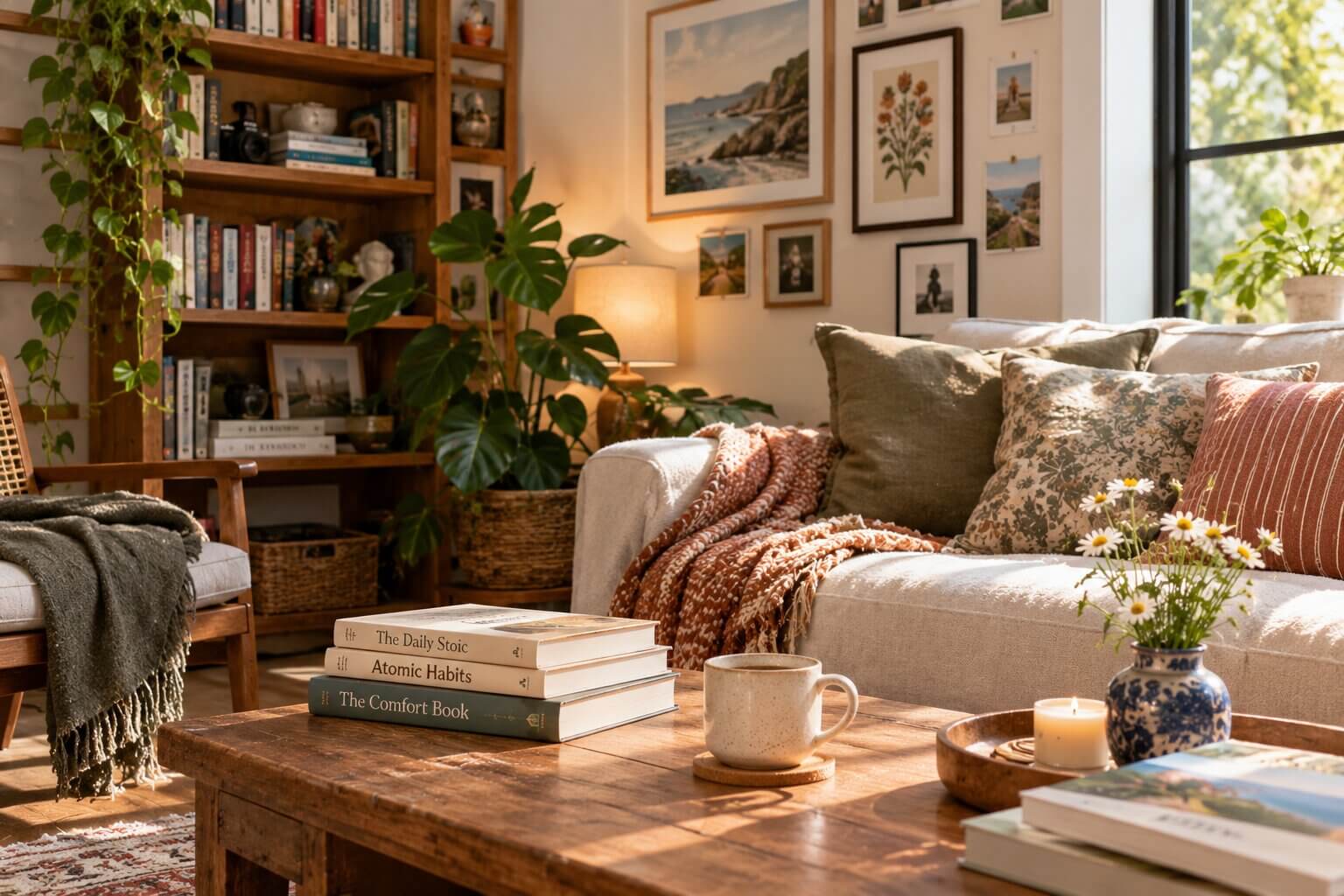
Direct Answer
A home can feel welcoming without following a strict decorating formula. A wooden table beside a modern sofa, a handmade ceramic vase on an open shelf, or a collection of books gathered over several years can make a room feel more personal than a perfectly coordinated furniture set.
This is part of the appeal of lived-in spaces. Instead of treating every room as a finished display, homeowners are choosing interiors that develop naturally through everyday use, personal interests, and objects collected over time.
Creating that look does not require buying more decorations. A thoughtful combination of materials, meaningful possessions, and practical furniture can give a room character while keeping it comfortable.

Start With the Materials Already in Your Room
Before purchasing anything new, look at the materials that dominate your space. You might have wooden furniture, painted walls, glass surfaces, metal fixtures, cotton curtains, or ceramic accessories.
A room containing many smooth surfaces, for example, may benefit from a softer material. A woven basket, knitted throw, or linen cushion can introduce a different texture without changing the furniture or color scheme.
Likewise, a room with several soft fabrics might benefit from a wooden tray, a ceramic vase, or another harder material to create contrast.
The idea is to notice what the room already has and identify where a small change could make it feel more balanced. This prevents unnecessary purchases and helps lived-in spaces develop a more natural appearance.
Combine Different Materials Without Matching Everything
A collected interior rarely looks as though every item came from the same store or furniture collection. Its character comes from the way different pieces work together.
Try combining:
- Wood and ceramic: A wooden side table can provide a natural surface for a handmade vase or mug.
- Linen and wool: Lightweight curtains and a knitted throw can add different kinds of softness.
- Paper and woven materials: Books arranged beside a woven basket can make an ordinary shelf feel more personal.
- Metal and vintage wood: A metal lamp can complement an older wooden desk or cabinet.
These combinations do not need to follow strict rules. Repeating one or two materials in different parts of the room can help create visual continuity.
The purpose is not to make every object match. It is to create enough connection between individual pieces that the room feels considered rather than randomly assembled.
Let Collected Objects Tell a Story
Personal belongings often give a room its strongest sense of identity. A postcard from a memorable trip, an inherited photograph, a secondhand painting, or a favorite book can make a space feel connected to its residents.
Instead of spreading every collectible across the room, group related objects together. A few photographs can share a shelf, while books and small decorative pieces can occupy a separate area.
Artwork can also develop gradually. You might begin with one print and add illustrations, postcards, or thrifted frames as you find pieces you enjoy. Different frame finishes and sizes can work together when the arrangement has a reasonable balance.
This approach makes lived-in spaces feel personal without requiring every available wall or surface to become a display area.
Use Furniture and Accessories for More Than Appearance
A comfortable interior should support the activities that happen inside it. A basket can hold blankets, a small table can keep reading materials within reach, and a shelf can provide storage while displaying a few meaningful objects.
Consider the purpose of each item before adding it to a room:
- Does it make an everyday activity easier?
- Does it have personal meaning?
- Does it contribute useful storage?
- Is it comfortable and practical to maintain?
An object does not need to satisfy every question. However, considering its purpose helps prevent decorative purchases from accumulating without improving the room.
This is especially helpful in smaller homes, where every piece of furniture or accessory may need to serve more than one function.
Keep Collections Visible Without Overcrowding the Room
Books, artwork, and vintage finds can make a home distinctive, but collections need enough space to remain enjoyable.
One useful approach is to display a selection rather than everything at once. Keep current reading material near a favorite chair, arrange a few decorative objects on a shelf, and store less frequently used pieces in labeled containers.
You can also rotate displays when the room starts to feel crowded. Seasonal decorations, photographs, and collected objects can return to view at different times of the year.
Leave some surfaces open for practical use. A clear section of a coffee table or kitchen counter makes daily activities easier and gives displayed items more room to stand out.
The goal is not to remove personality from the room. It is to make sure personal belongings remain accessible and enjoyable rather than becoming another source of clutter.
A home that feels comfortable can also make it easier to slow down and enjoy the things you love, whether that’s reading about soft ambition or simply taking a quiet break at the end of the day.
Make Each Room Reflect Its Everyday Purpose
The best decorating choices depend partly on how a room is used.
A workspace may need focused lighting, an appropriate chair, and convenient access to notes. A reading corner might need a comfortable seat, a lamp, and a small table. A living room used for family gatherings may benefit from flexible seating and storage for frequently used items.
Research published in the Journal of Environmental Psychology has examined relationships between home clutter and psychological well-being, including the role of perceived beauty. This does not mean a home must remain spotless. It highlights why the balance between personal possessions and usable space deserves attention.
IKEA’s Life at Home research also explores how comfort, identity, and belonging contribute to people’s experiences at home. An interior should do more than look attractive; it should support the routines and relationships that make a home meaningful.
Frequently Asked Questions
What makes an interior look collected rather than cluttered?
A collected interior combines objects with personal meaning, different materials, and furniture gathered over time. It avoids looking cluttered by keeping displays intentional, maintaining usable surfaces, and storing belongings that do not need to remain visible.
How can I combine different textures in one room?
Start with the materials already present. Add one or two contrasting textures, such as a woven basket in a room with smooth furniture or a knitted throw alongside linen curtains. Repeating a few materials elsewhere can help the room feel connected.
Do all furniture pieces need to match?
No. Different furniture styles can work together when they share some visual connection, such as a similar wood tone, material, or general color palette. A room can include vintage and contemporary pieces without looking unfinished.
How do I decorate shelves without making them look crowded?
Combine books with a small number of meaningful objects, vary the arrangement, and leave some open space. Store or rotate items when the shelves become difficult to use or clean.
Can I create lived-in spaces on a limited budget?
Yes. Start with belongings you already own, rearrange furniture, reuse baskets, and look for secondhand artwork or accessories. A more personal home does not require replacing everything or purchasing a coordinated collection.
Final Thoughts
A home becomes more interesting when it reflects the people who use it. Books, old furniture, artwork, natural materials, and practical storage can all contribute to an interior that feels comfortable and personal.
Rather than buying decorations simply to complete a look, pay attention to what your rooms need and which belongings you genuinely enjoy. Lived-in spaces become more inviting when their character develops naturally, and every addition has a reason to be there.
Further Reading for the Soul
- Why Do Women Crave Comfort Fiction?
- How The Seat of the Soul Influenced Tiffani Thiessen
- Related reading on clooudi.com: using vintage objects to create a warmer seasonal home; selecting coffee-table books for a personal interior.