
Quick answer: Susan Lucci’s La Lucci story matters because it turns grief after Helmut Huber’s death into a fuller conversation about love, health, memory, writing, and identity after loss. For Clooudi readers, the value is not only the celebrity headline. It is the way Lucci uses her public life, her 52-year marriage, and her memoir to talk honestly about starting again.
Why Susan Lucci’s Memoir Story Matters
For over forty years, the name Susan Lucci has been synonymous with a specific kind of American resilience. As the legendary Erica Kane on All My Children, she did not just play a character. She defined an era of television.
Audiences knew her as the woman who survived plane crashes, dramatic reversals, and some of daytime television’s most memorable plot twists. But Lucci’s most difficult chapter was not written by a Hollywood screenwriter. It came from real life after the death of her husband, Helmut Huber.
In the exclusive video interview with Susan, the conversation moves beyond awards, glamour, and nostalgia. It looks at grief as something physical, personal, and ongoing. It also shows why readers are still drawn to celebrity memoirs when the story reveals the person behind the public image.
The Helmut Huber Legacy Behind La Lucci
To understand the depth of Susan Lucci’s current journey, it helps to understand the foundation of her life with Helmut Huber. In her recent reflections, Lucci describes a partnership that defied the usual Hollywood odds. For 52 years, Huber was not only her husband. He was also her manager, protector, and steady presence.
When Helmut passed away in March 2022, the “Queen of Daytime” found herself in a role she never rehearsed for: widowhood. Lucci has described the immediate aftermath as a “puddle of grief,” a phrase that captures both the emotional and physical weight of loss.
The featured conversation goes deeper into the day-to-day reality of survival. How do you wake up in a house that echoes with 52 years of shared life? How do you make decisions when your primary confidant is gone? Those quiet questions turn the article from a celebrity update into a story about human resilience.
Writing As A Way Through Grief
One of the most compelling parts of Lucci’s story is her return to La Lucci. Writing becomes more than a career document or a collection of memories. It becomes a way to process emotions that may be difficult to say out loud.
Lucci often found herself writing in the middle of the night. In that silence, the memoir became a place to revisit love, pain, regret, gratitude, and the parts of herself that were easy to hide during the busiest years of her career.
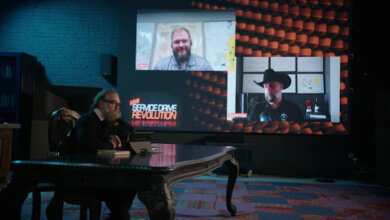
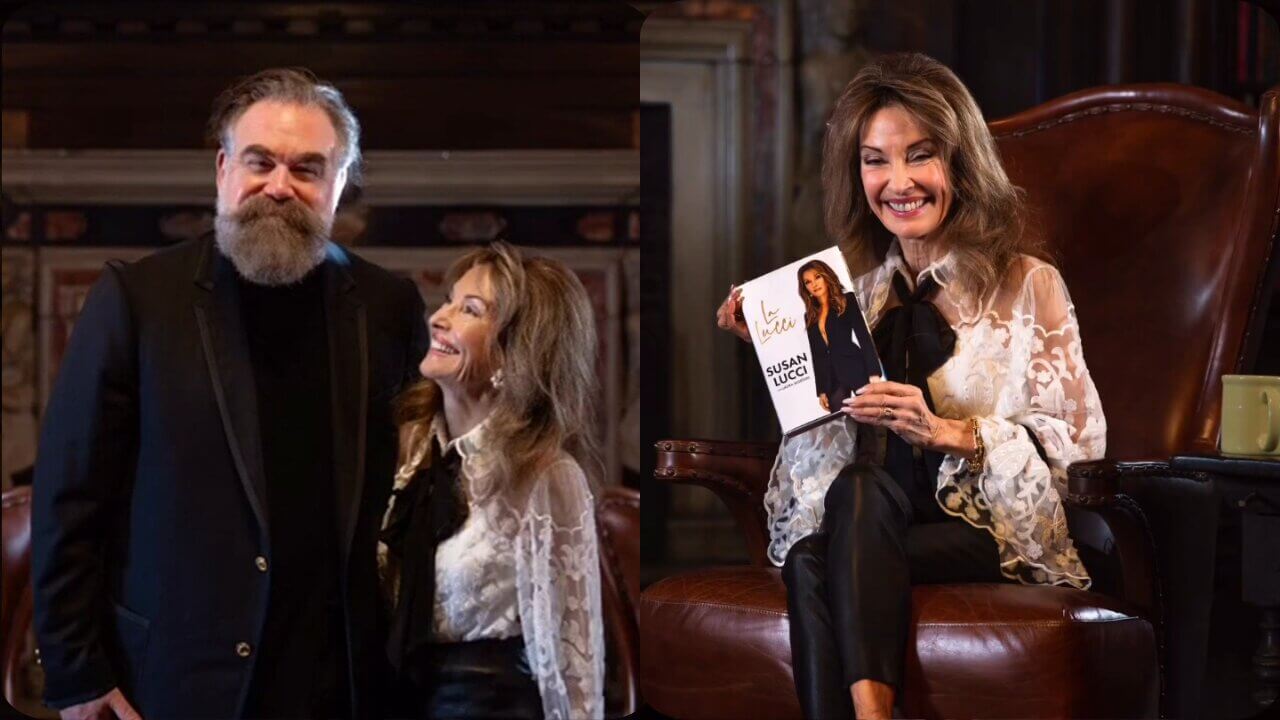
In this episode of Books That Change My Life, Susan sits down with host Chris Collins. They discuss the chapters that were hardest to revisit, why honesty matters in grief, and what it takes to remove the Erica Kane armor long enough for readers to see the woman underneath.
Key Themes In Susan Lucci’s Story
| Theme | What The Article Explores | Why It Matters For Readers |
|---|---|---|
| Grief after long marriage | Lucci’s life after losing Helmut Huber following 52 years together | It gives language to loss that does not disappear on a timeline |
| Memoir as healing | How La Lucci becomes a way to revisit memory and identity | It shows why personal writing can help people process major life changes |
| Health and resilience | Her openness about grief, stress, and women’s heart health | It connects emotional pain with the need to listen to the body |
| Public image versus private life | The difference between Erica Kane, the icon, and Susan Lucci, the person | It makes the celebrity memoir more human and more relatable |
Heart Health, Loss, And Public Advocacy
Susan’s transparency about grief as a physical experience is one of the most relatable parts of the story. She has explained that the heaviness of loss was not simply a sad feeling. It could feel like weight in the limbs, fog in the mind, and exhaustion in the body.
In the interview, Susan also discusses the health scares she faced, including near-miss cardiac events. The article connects those moments with the broader reminder that emotional trauma and physical health can affect each other. Lucci’s advocacy for women’s heart health through the American Heart Association’s Go Red for Women campaign adds another layer to the story.
That mission gives the article a useful takeaway beyond entertainment news. Lucci’s experience encourages readers, especially women, to pay attention to symptoms, stress, and the signals their bodies may be sending.
From Queen Of Daytime To Voice Of Resilience
The public’s love for Susan Lucci remains strong, but the conversation around her has changed. She is no longer being asked only about the next role, the next red carpet, or the legacy of All My Children. More often, the question is: how did she survive a loss that changed the shape of her life?
Lucci’s answer is not a simple motivational slogan. It is a layered process of learning how to move from “we” to “I” after more than five decades of partnership. That shift is something many readers can understand, whether they are dealing with death, divorce, reinvention, or another major life pivot.
Her journey offers three clear lessons:
- Grief has no expiration date: It is not something a person simply gets over. It is something they learn to carry differently.
- Work can be a sanctuary: Returning to familiar routines can create structure when everything else feels unstable.
- Vulnerability can help others: By speaking openly about pain, Lucci gives other people permission to acknowledge their own.
A Legacy Beyond The Screen
Beyond the heartbreak, the interview also touches on the joy Susan still finds in her family. Her children and grandchildren become part of the support system that helps her keep moving forward.
That makes the idea of legacy broader than a television career. It is not only the legacy of a show that ran for decades. It is also the legacy of a marriage, a family, and a public figure willing to become more honest with age.
In a culture that often reduces women in entertainment to past roles, Susan Lucci remains a vibrant rebuttal. She is sharp, stylish, engaged, and still evolving. She is not only surviving the next chapter. She is actively shaping it.
Why This Conversation Fits Clooudi’s Reading Coverage
Clooudi has been tracking how celebrity voices, book communities, and memoir conversations influence what people read next. Lucci’s story belongs in that wider reading culture because it shows why memoirs still matter: readers want lived experience, emotional honesty, and a reason to care beyond the headline.
For more context on the same reading-culture lane, read The Celebrity Book Club Effect, Which Celebrity Book Club is the Best for You?, and How BookTok is Making Reading Cool Again. Those pieces help explain why famous readers, online communities, and personal recommendations can turn a book into a shared cultural moment.
Where To Watch The Full Conversation
While Lucci’s written words offer one window into her healing, the full conversation adds tone, pauses, laughter, and emotion that a page cannot fully capture.
Readers who want the complete Susan Lucci conversation with Chris Collins can check the Syndicate X Library YouTube channel for the full episode of Books That Change My Life.
Related Clooudi Reads
- Susan Lucci: Finding Resilience and Your Inner Glow
- The Celebrity Book Club Effect
- Which Celebrity Book Club is the Best for You?
- How BookTok is Making Reading Cool Again
- BookTok to A-List Picks: Celebrity Book Clubs in 2026