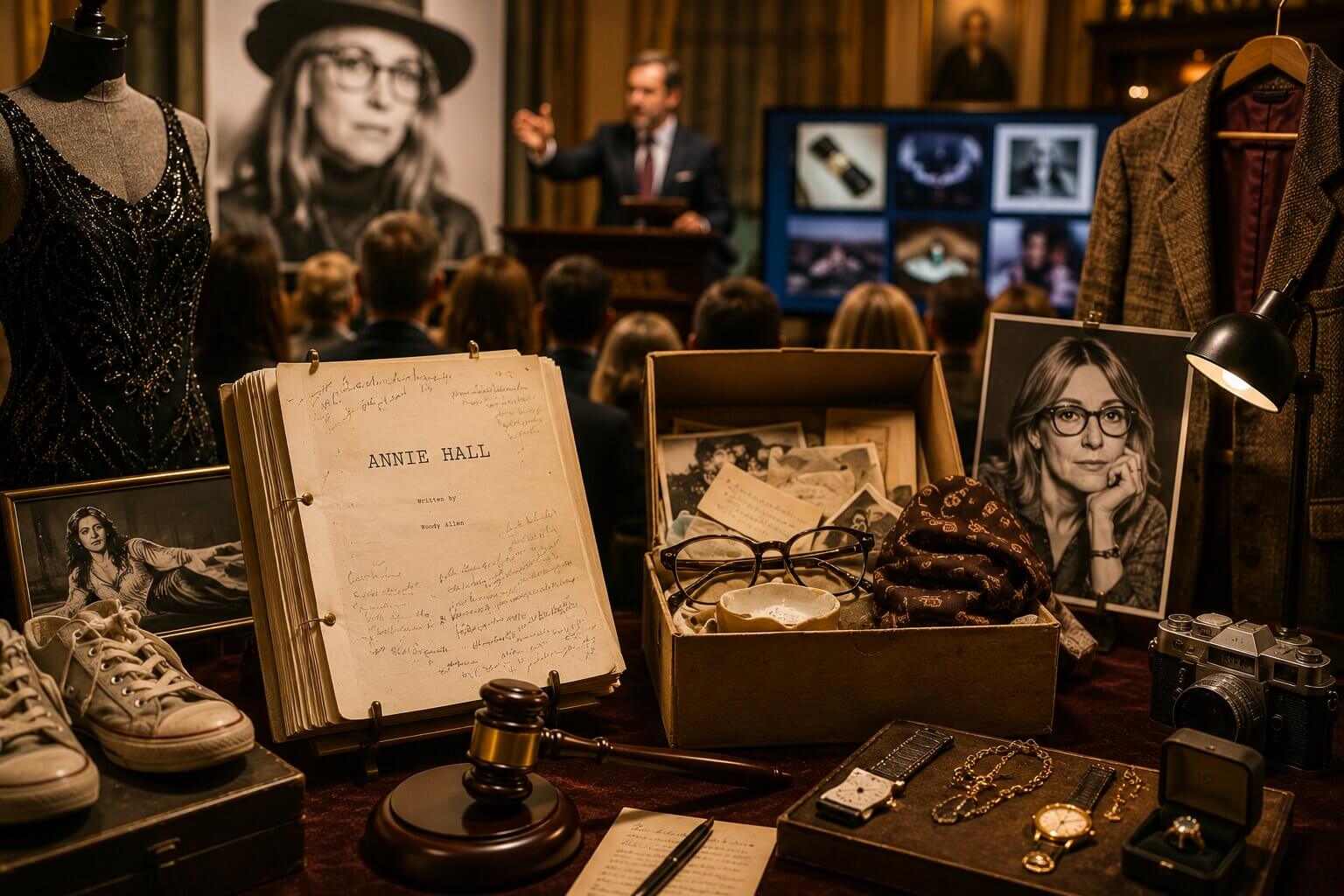

A celebrity’s handwritten note. A worn-out script. A pair of reading glasses. Even a box of everyday household items.
In 2026, some of the hottest collectibles in pop culture aren’t luxury fashion pieces or rare memorabilia. Instead, they are deeply personal objects that once belonged to famous people. This growing fascination has fueled an explosion in celebrity estate auctions, where fans are paying astonishing prices for items that would seem ordinary outside their connection to a star.
The latest example comes from actress Diane Keaton, whose recent auction generated headlines when her original Annie Hall script sold for hundreds of thousands of dollars. Yet much of the online conversation focused on something far less glamorous: a box containing everyday personal items that sold for nearly $1,000.
The reaction highlights a fascinating cultural shift. Fans are becoming less interested in traditional merchandise and more interested in owning authentic pieces of celebrity history—no matter how ordinary those objects may be.
What Is Driving the Boom in Celebrity Estate Auctions?
Celebrity memorabilia has existed for decades, but today’s auction market feels different.
Instead of focusing exclusively on iconic costumes, awards, or luxury possessions, buyers are increasingly drawn to personal objects that reveal something about a celebrity’s everyday life.
Fans want authenticity.
A movie costume may represent a character, but a personal notebook, kitchen item, or annotated script represents the individual behind the public image. These objects create a feeling of intimacy that traditional collectibles often cannot match.
As a result, estate auctions are becoming cultural events rather than simple sales.
Why Are Ordinary Items Selling for Extraordinary Prices?
At first glance, it seems irrational.
Why would someone spend hundreds or thousands of dollars on used personal items that have little practical value?
The answer lies in emotional significance.
Collectors are not buying the object itself. They are buying proximity to a person whose work, image, or legacy has shaped their lives.
A pair of glasses may be ordinary. A pair of glasses owned by a beloved celebrity becomes a physical connection to someone many people feel they know, even if they never met them.
This emotional connection often outweighs the object’s material value.
How Has Celebrity Culture Changed?
Modern celebrity culture is built on access.
Social media has blurred the line between public and private life, allowing fans to see behind-the-scenes moments that previous generations rarely experienced.
As audiences become accustomed to personal content, interest naturally expands beyond professional achievements and into everyday details.
Fans are increasingly curious about what celebrities read, collect, wear, save, and surround themselves with.
Estate auctions satisfy that curiosity by offering tangible pieces of a celebrity’s personal world.
Why Are Legacy Celebrities Generating So Much Interest?
One reason is scarcity.
For living celebrities, fans can still follow social media updates, interviews, and public appearances. Legacy celebrities—or public figures whose most culturally significant years are behind them—offer something different.
Their stories feel complete.
As a result, personal belongings become historical artifacts that help preserve and understand a particular cultural era.
This dynamic is especially powerful when the celebrity plays a significant role in shaping fashion, film, music, or broader pop culture.
More stories worth exploring: How Pillars of the Earth Shaped Danielle Campbell’s Family View
Are Fans Buying History Rather Than Merchandise?
In many cases, yes.
Traditional merchandise is designed for mass consumption. Thousands or even millions of identical products can exist.
Auction items are unique.
There is only one original script, one personal journal, or one collection of belongings from a specific moment in a celebrity’s life.
That uniqueness creates a sense of historical ownership that ordinary merchandise cannot replicate.
Collectors increasingly see themselves as preserving cultural history rather than simply acquiring souvenirs.
How Is Social Media Fueling the Trend?
Social media has amplified interest in celebrity auctions dramatically.
Unusual sales often go viral because they spark curiosity and debate. People are fascinated by what sells, how much it sells for, and what it reveals about fan culture.
The more surprising the item, the more attention it receives.
A famous dress selling for a large amount is expected. A box of everyday household items attracting competitive bids is what generates headlines and online discussion.
These viral moments often bring entirely new audiences into the world of celebrity collecting.
What Does This Trend Reveal About Modern Fandom?
Modern fandom is becoming increasingly personal.
Fans are no longer satisfied with simply consuming content. They want deeper forms of connection to the people and stories that matter to them.
Owning a celebrity’s personal item creates a feeling of participation in that story.
In some ways, the object functions almost like a physical memory. It allows fans to feel connected to moments, careers, and cultural eras that have personal significance.
This emotional dimension helps explain why seemingly ordinary objects can command extraordinary prices.
Also worth checking out: BookTok to A-List Picks: Celebrity Book Clubs in 2026
Is This Connected to the Rise of Nostalgia Culture?
Absolutely.
Nostalgia has become one of the most powerful forces in entertainment, fashion, and consumer behavior.
As audiences revisit beloved films, music, and cultural moments, interest naturally extends to the people associated with those memories.
Celebrity estate auctions allow fans to own small pieces of the past in a way that feels tangible and personal.
According to Bonhams, celebrity and entertainment memorabilia continue attracting strong collector interest, particularly when items carry personal or historical significance.
This growing demand reflects a broader cultural desire to preserve and reconnect with meaningful moments from the past.
Could Celebrity Estate Auctions Become Even Bigger?
There are strong signs that they could.
As more public figures recognize the value of their personal archives, future auctions may become increasingly curated and intentional.
Celebrities are beginning to view personal collections as cultural assets rather than private possessions.
Fans, meanwhile, continue seeking authenticity in an age dominated by digital experiences.
A physical object with a direct connection to a cultural icon offers something that digital content cannot: tangible ownership of a piece of history.
According to Sotheby’s, demand for culturally significant collectibles continues evolving as buyers place greater value on provenance, storytelling, and uniqueness.
FAQ Section
What is a celebrity estate auction?
A celebrity estate auction is a sale of personal belongings, memorabilia, documents, or collectibles connected to a famous individual.
Why do ordinary celebrity items sell for so much money?
Buyers are often paying for emotional connection, rarity, historical significance, and authenticity rather than practical value.
Are celebrity auctions only popular with wealthy collectors?
No. While some items sell for large amounts, auctions often include more affordable pieces that appeal to a wide range of fans.
Why are personal items becoming more desirable than traditional merchandise?
Personal belongings provide a unique and direct connection to a celebrity’s life, making them feel more authentic and meaningful.
Conclusion
The rise of celebrity estate auctions reflects a fascinating shift in modern fandom. In 2026, fans are increasingly interested in owning authentic fragments of a celebrity’s everyday life rather than mass-produced memorabilia.
Whether it’s a famous script, a handwritten note, or even a box of seemingly mundane personal items, these objects offer something rare: a tangible connection to cultural figures who have shaped public imagination. As nostalgia, authenticity, and personal storytelling continue driving consumer behavior, the market for celebrity keepsakes may only become more powerful in the years ahead.