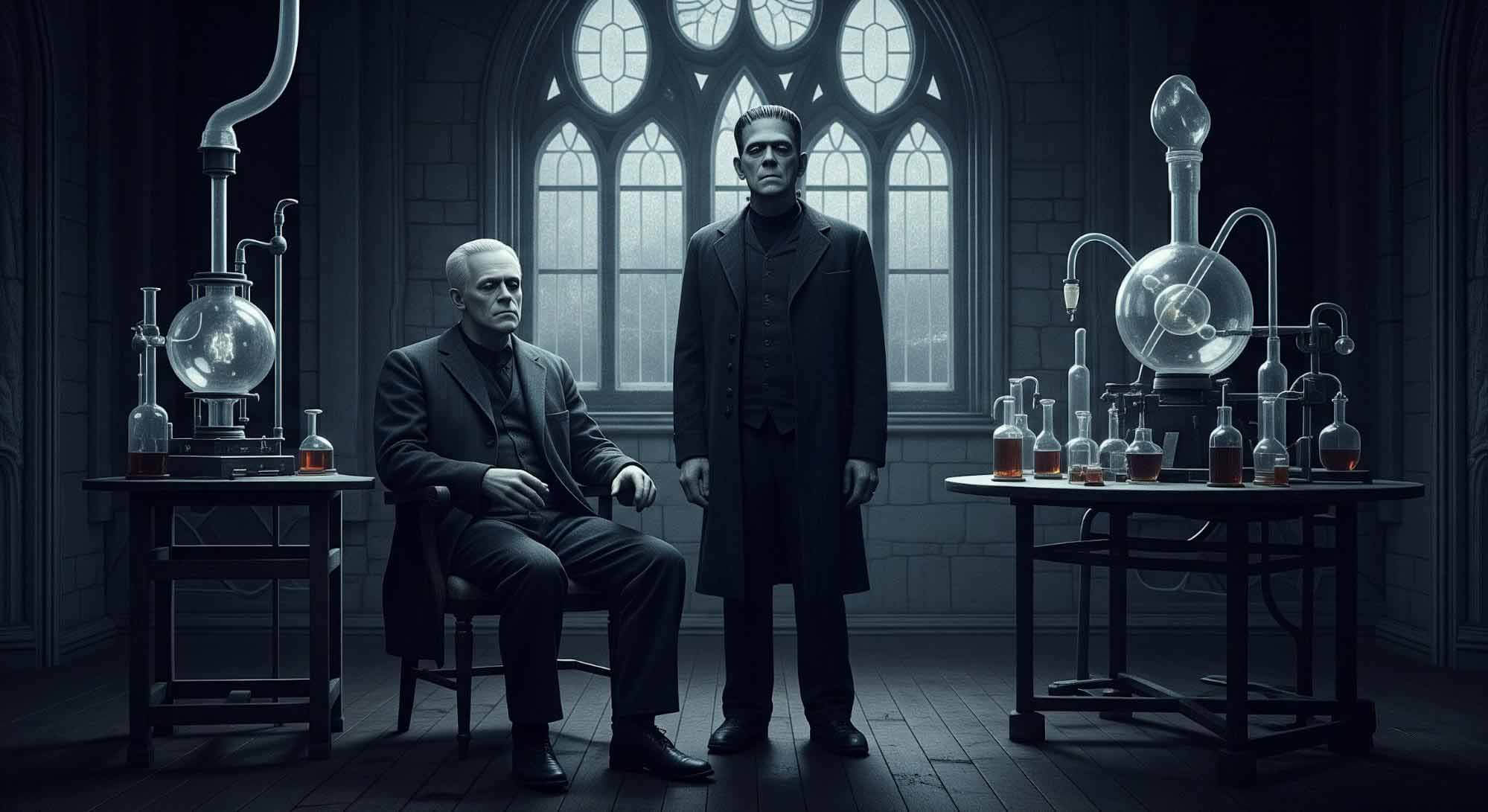

Quick answer: Guillermo del Toro’s Frankenstein is a Gothic Netflix adaptation of Mary Shelley’s 1818 novel, led by Oscar Isaac as Victor Frankenstein and Jacob Elordi as the Creature. It is worth watching if you like literary adaptations, dark fantasy, emotional monster stories, or del Toro’s mix of beauty, grief, and horror.
By Jayne Turner – Staff Writer
What Is Guillermo del Toro’s Frankenstein About?
Guillermo del Toro’s Frankenstein revisits the familiar story of an ambitious scientist who creates life, then fails to take responsibility for the being he brings into the world. The core question is not only whether Victor Frankenstein can conquer death. It is whether a creator can look at his creation with compassion instead of fear.
Netflix’s official Tudum feature describes the movie as inspired by Mary Shelley’s novel, with Victor Frankenstein viewing the Creature as an experiment while del Toro frames the Creature as something more wounded, human, and spiritually important. That angle fits del Toro’s long-running interest in misunderstood monsters, broken families, and the line between beauty and horror.
Frankenstein 2025 At A Glance
| What to know | Details | Why it matters |
|---|---|---|
| Director and writer | Guillermo del Toro | His style makes the story feel emotional, Gothic, and visually rich instead of just another monster movie. |
| Source material | Mary Shelley’s Frankenstein | The movie is built around the classic creator-and-creature conflict that has shaped horror and science fiction for generations. |
| Main cast | Oscar Isaac as Victor Frankenstein and Jacob Elordi as the Creature | The adaptation depends on the tension between creator, creation, guilt, and longing. |
| Best audience fit | Fans of Gothic literature, dark fantasy, literary horror, and emotional character drama | This is more than a jump-scare movie; it works best as a tragic adaptation. |
| Where to watch | Now streaming on Netflix | The old release wording should be refreshed because the movie is already available. |
Why Guillermo del Toro Fits This Story
Del Toro has built much of his career around creatures that reveal something tender, frightening, or morally complicated about human beings. Pan’s Labyrinth turns fairy-tale imagery into a story about violence and innocence. The Shape of Water treats a creature as a romantic and emotional center instead of a disposable monster.
That is why Frankenstein feels like a natural match. In a CBS interview, del Toro speaks about his lifelong attachment to Mary Shelley and Frankenstein. This is not a random studio assignment for him; it is material that matches his visual taste and his favorite moral question: who is the real monster?
The Cast And Characters To Know
Oscar Isaac plays Victor Frankenstein, the brilliant but dangerous creator whose ambition pushes him past ethical limits. Jacob Elordi plays the Creature, the living result of Victor’s obsession. The casting matters because the story needs both sides to feel intense: Victor has to be frightening in his certainty, while the Creature has to feel more than monstrous.
The supporting cast helps widen the world around Victor’s experiment. Mia Goth appears as Elizabeth Lavenza, and Christoph Waltz appears as Heinrich Harlander. Instead of treating the Creature as a simple villain, the adaptation leans into the tragedy of being made, rejected, and left to understand the world alone.
How It Connects To Mary Shelley’s Novel
Mary Shelley’s Frankenstein is often remembered as a monster story, but its power comes from grief, isolation, responsibility, and failed parenthood. Victor creates life, then refuses to care for what he has created. The Creature becomes terrifying partly because he is abandoned, feared, and denied belonging.
That makes the story more layered than “scientist makes monster.” It asks what happens when knowledge grows faster than wisdom, and when ambition is separated from care. Del Toro’s version appears to keep that emotional spine while making the Creature’s point of view especially important.
What Feels Different In Del Toro’s Version
The biggest difference is emphasis. Many Frankenstein adaptations focus on the experiment, the laboratory, or the horror of the Creature’s body. Del Toro’s version looks more interested in the Creature’s inner life: his confusion, longing, softness, and pain.
That shift makes Victor’s role more troubling. If the Creature is not just a monster but a being capable of feeling, then Victor’s failure is not scientific alone. It is emotional and moral. He wants the power of creation without the duty of care.
Is Frankenstein More Horror Or Tragedy?
It is both, but the tragedy is the point. The horror comes from bodies, experiments, obsession, and the consequences of playing creator. The emotional force comes from abandonment, loneliness, and the way a person can become cruel when they refuse to see another being clearly.
That balance is why the movie can work for viewers who are not usually horror fans. If you liked the emotional side of The Shape of Water or the dark fairy-tale mood of Pan’s Labyrinth, this adaptation has a similar lane: strange, beautiful, sad, and unsettling.
Who Should Watch It?
Watch del Toro’s Frankenstein if you enjoy literary adaptations that do more than summarize the book. It is also a strong pick for viewers who like Gothic atmosphere, complicated father-and-son themes, creature design, and stories where the so-called monster may be the most human figure on screen.
If you are building a movie night around book-to-screen stories, pair this with Clooudi’s guide to the best way to watch Wicked: For Good. For a reading angle, Clooudi’s Halloween costume book match guide and BookTok reading culture explainer can help you find the next Gothic or fantasy-leaning read.
Related Clooudi Reading And Watch Guides
If this adaptation sends you back toward books, celebrity reading lists, or movie-night planning, start here:
Final Take
Guillermo del Toro’s Frankenstein stands out because it treats the Creature as more than an icon of horror. It returns to the emotional center of Shelley’s story: creation without responsibility, genius without tenderness, and the pain of being rejected by the person who made you.
For viewers who want a Gothic adaptation with spectacle and feeling, this is one of the most natural del Toro projects imaginable. It is not only a story about a monster. It is a story about what happens when a creator cannot love what he creates.
For official background, read Netflix Tudum’s feature on Guillermo del Toro’s Frankenstein adaptation.
—
Author: Jayne Turner is a freelance writer from Orange, California. She has a bachelor’s degree in Neuroscience with an emphasis on language and cognition. She has ten years of musical theatre experience and a lifelong love of reading. Utterly excited by the brain, she brings a fresh Gen Z perspective to the topics that intrigue us most.